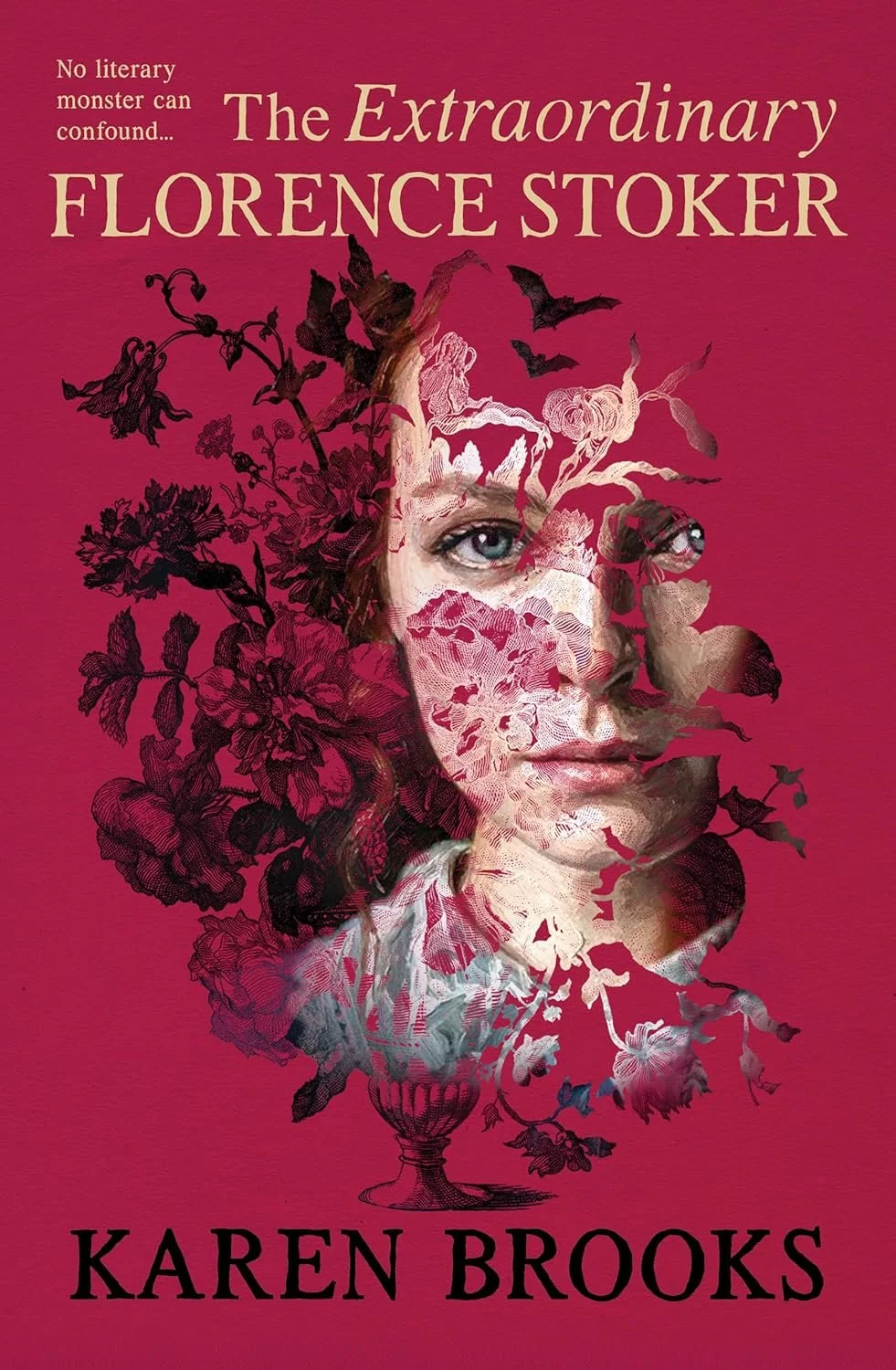
Review of 'The Extraordinary Florence Stoker' by Karen Brooks
Review of 'Review of 'The Extraordinary Florence Stoker' by Karen Brooks
Release date: Sept 1st, 2026
Publisher: HQ
📚
REVIEW
Where does one begin to comment on The Extraordinary Florence Stoker by talented Karen Brooks? The novel is such a comprehensive character study with a wealth of wonderful material to digest. First, the title is a clear indication that Florence was an amazing person. She had incredible fortitude while she dealt with some heavy challenges and carried enormous secrets all her married life. She was long suffering and steadfast and fought her battles with conviction.
Born in Ireland in 1858, she grew up to become a beautiful and witty young lady who caught the eye of Irish poet, author and playwright Oscar Wilde (a man who championed the Aesthetic Movement that coined the phrase ‘Art for Art’s Sake’). Then she married Dracula author, Bram Stoker, a theatre manager who worked tirelessly for Henry Irving. After Bram’s passing, Florence became well known for her legal dispute with the film makers of Nosferatu, an unauthorised movie version (1922) of her late husband’s Dracula novel. This battle is well covered in The Extraordinary Florence Stoker storyand it highlights her passion to protect her husband’s legacy.
To my delight, many intriguing topics run through this novel and it is heavily filled with artistic works and well known literary figures. Discussions about Coleridge’s Rime of the Ancient Mariner, Mary Shelly’s Frankenstein, as well as works by Dickens, Keats and so many others set my literary antenna flashing. I loved all the references and conversations about authors and their works and lives. The witty banter between Bram and Florence in their early acquaintance days was so much fun to read. And when he said he hoped to become more famous than Charles Dickens, it revealed his high aspirations. Florence was taken by his sincere ambitions and ‘earnest expression’ and let him know she believed he could achieve his dreams. This faith in him was what sparked deeper interest in her and resulted in their courtship. And eventually led to their marriage and a son. But always in the background over the years, another figure overshadowed every step. Florence was always battling for her husband’s time and attention— against his strong ties to his work and connection to theatrical narcissist Henry Irving.
There are some interesting conversations between Florence and Bram about authors and publishing. He raises the concern of every author: “does the work merit readers?’ Her response of ‘Surely publishers only accept work of quality, those that they believe have readership’ was challenged by Ellen, when she said that ‘Quality is not always a consideration.’ Yes, sometimes it is a name they are banking on to sell a book.
This novel has plenty of psychological suspense, societal pressures and real historical events filling its pages. We get glimpses of many players, often through Florence’s eyes. There are some shock revelations for Florence (and readers) and analysations of friendships. There are some insightful comparisons and contrasts made by Florence of Bram and Oscar Wilde. And Florence’s worries are valid.
The word ‘monster’ is used a fair bit in the last half of the novel and what that means (no give aways here though!). But one thing I can say is when Florence is thinking about her son, after he has had a scary experience, the question is raised. Will a diet of ghost stories and tales of creatures that pluck children from their beds and punish them, manifest in unhealthy fears and cause a child to react as their son did to Henry’s stage costume? The boy is accused by Henry of not being able to differentiate between reality and fantasy. Florence prays the event will have no lasting effect on her son. But she also hopes that experience will not ‘crawl its way into Bram’s fiction and live forever.’ Hmm… lots of food for thought!
Themes of betrayal, near-death experiences, living in the shadows (like Dracula!), copyright infringement / theft of artistic works, society taboos – particularly in romantic relationships are just a few areas covered. This woman fought some tough battles but she was surrounded by important friends like Ellen Terry, Genevieve Ward, Sir Willian Gilbert. She also dined with Conan Doyle, watched Jules Vernes dance on tables, ‘laughed with royalty’ and was snowbound in a hotel with an American president. Yes, she had some heartbreaking challenges, too. She was a bright woman who raised many valid questions. One being: ‘Why is it that women must always pay the price for men’s sins?’ It is easy to admire her in the fight against copyright infringement. And her nickname Mrs Dracula is endearing as it meant she still had bite!
This novel is an incredible portrayal of an extraordinary woman who did so much not only for her husband and his Dracula novel but also for all writers to come. It was a tough era but she felt the process transformed her into a better and stronger person. Adversity can do that!
I have so many tags on the pages that I could rave on about but I must stop and encourage readers to pick this book up and get lost in this fascinating world of Florence Stoker that Karen Brooks has so magnificently created. It is a moving story laced with depth, desire, dis-ease and determination. Karen’s years of stunning historical research shows in the most magnificent way. I highly encourage those who like brilliantly delivered historical fiction to get a copy. 5 Stars ⭐️⭐️⭐️⭐️⭐️
Thanks to HQ Fiction, Netgalley and HQ Insider for a review copy.